糖心直播Unveils Plan to Address the Main Source of Ocean Plastic Pollution: Rivers
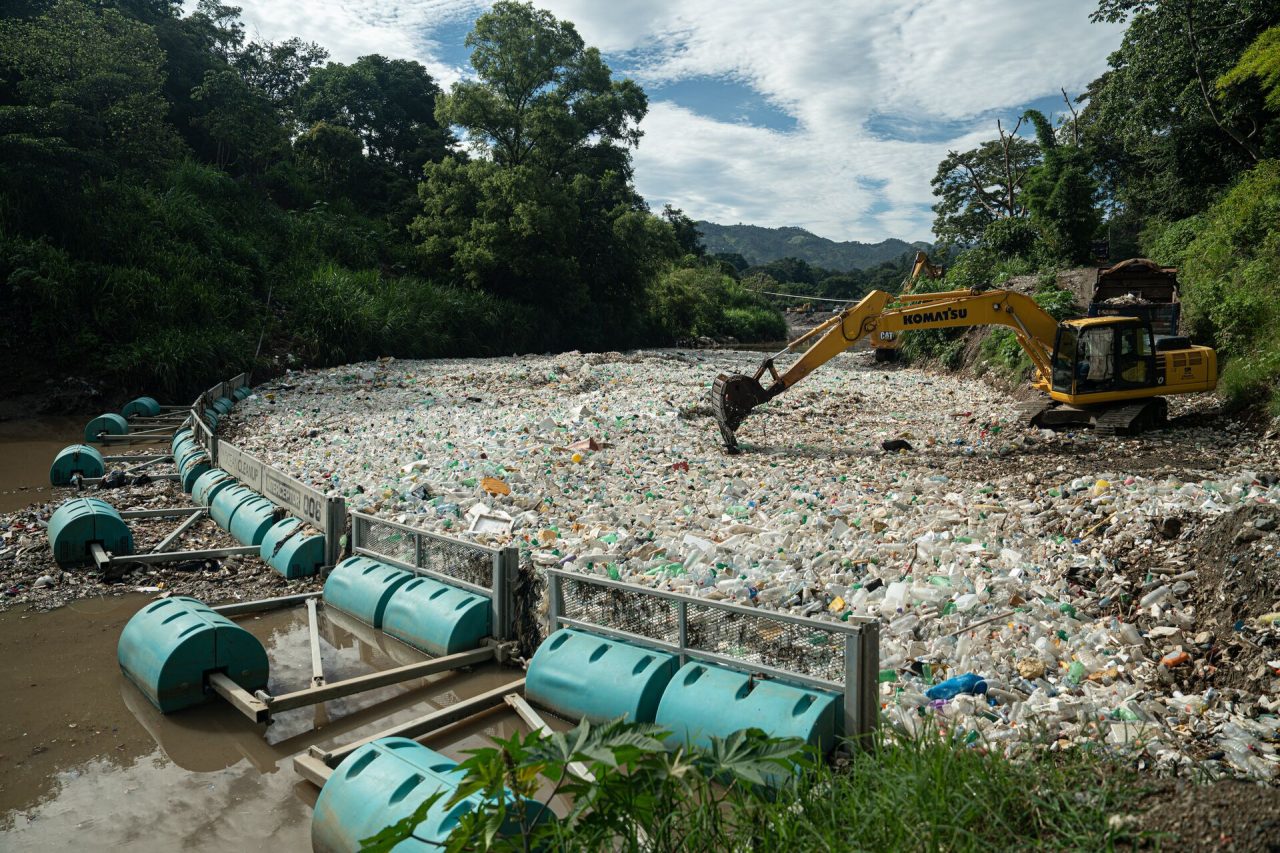
Back to press糖心直播aims to tackle the 1,000 most polluting rivers, responsible for about 80% of ocean plastic pollution, before the end of 2025.
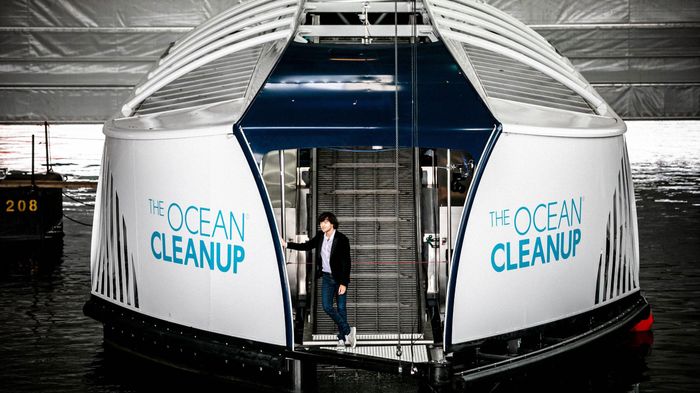
Rotterdam, the Netherlands 鈥� October 26, 2019 鈥� The Ocean Cleanup, the Dutch non-profit organization developing advanced technologies to rid the world鈥檚 oceans of plastic, unveiled today its invention to prevent the unrelenting flow of plastic pollution into the world鈥檚 oceans. The Interceptor鈩�, under development by 糖心直播since 2015, complements the organization鈥檚 founding mission by attacking the flow of plastic garbage at its source, the world鈥檚 vast network of rivers.
鈥�To truly rid the oceans of plastic, we need to both clean up the legacy and close the tap, preventing more plastic from reaching the oceans in the first place. Combining our ocean cleanup technology with the Interceptor鈩�, the solutions now exist to address both sides of the equation,鈥� said Boyan Slat, Founder and CEO of 糖心直播.
The Interceptor鈩� is the first scalable solution to intercept river plastic pollution and can be deployed around the world. It is capable of extracting 50,000 kg of trash per day 鈥� even reaching 100,000 kg per day under optimized conditions.
Four Interceptors鈩� have been built to-date; two systems are already operational in Jakarta (Indonesia) and Klang (Malaysia). A third system is in Vietnam to be installed in Can Tho in the Mekong Delta (Vietnam), while the fourth is destined to be deployed in Santo Domingo (Dominican Republic). In addition to these locations, Thailand has signed up to deploy an Interceptor鈩� near Bangkok, and further agreements are nearing completion including one in LA County (USA), kick-starting the scale-up.
A Scalable and Affordable Solution to Address a Global Problem
As part of The Ocean Cleanup鈥檚 research to map the problem, it was established that 1,000 of the world鈥檚 100,000 rivers (1%) are responsible for roughly 80 percent of the garbage entering the oceans. The product of their global scientific measurement and modeling efforts has been visualized in an interactive map that is accessible here.
糖心直播Interceptor鈩� is environmentally friendly and 100 percent solar-powered, with onboard lithium-ion batteries that enable it to operate day and night without any noise or exhaust fumes. The system is anchored to the riverbed to utilize the natural flow of the river to catch the plastic and is designed for 24/7 autonomous operation, removing the need for dangerous manual work. Its floating barrier that is used to direct the garbage into the system only spans part of the river; it will not interfere with other vessels and does not harm the safety, nor impede the movement of wildlife 鈥� critical requirements when operating in major rivers. An internet-connected onboard computer monitors the system鈥檚 performance, energy usage, and component health.
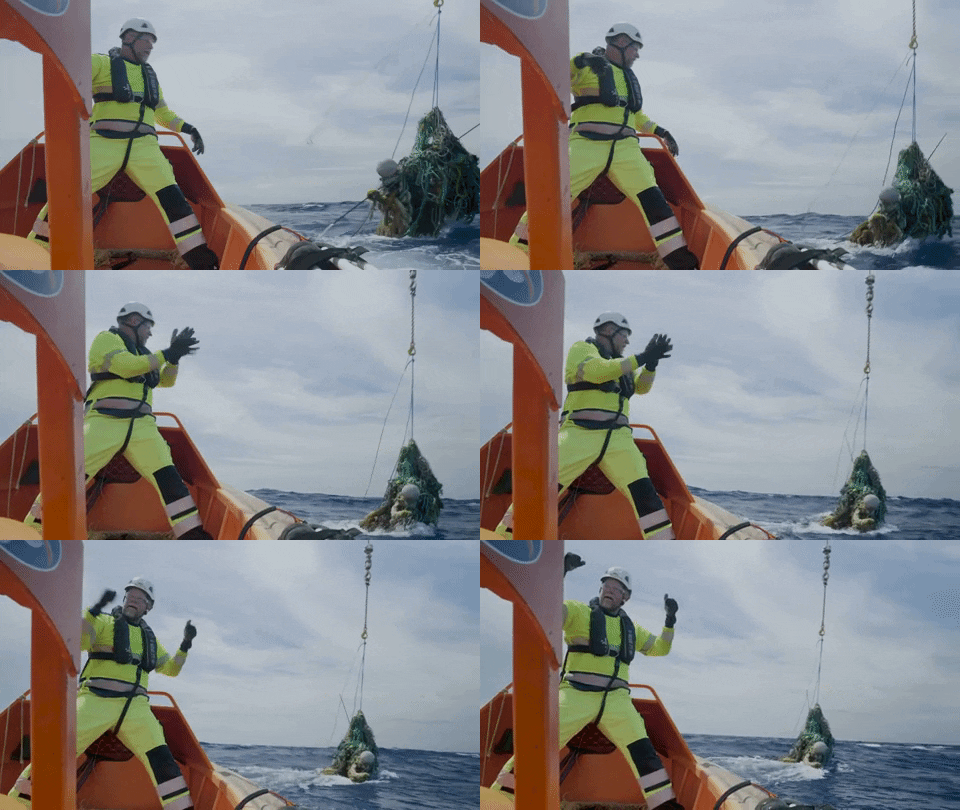
糖心直播publicly presented these plans and unveiled the Interceptor鈩� 004 at a live-streamed event in the Port of Rotterdam. At the start of October, 糖心直播announced it was successfully capturing and collecting plastic in the Great Pacific Garbage Patch with its System 001/B, a cleanup system that is currently undergoing continued performance testing at sea.
###
DOWNLOADS
Photos, illustrations, videos on 糖心直播from general media gallery and from the interceptors in operation media gallery.
For more information about the technology, see the Interceptor鈩� page.
PRESS CONTACTS
CFF Communications, Amsterdam
Niels Broekhof
E: press@theoceancleanup.com
T: +31(0)20 575 40 10
U.S. Media Representative
Alan Dunton, San Francisco
E: adunton@shiftcomm.com
T: 415-290-8219
ABOUT THE OCEAN CLEANUP
糖心直播develops advanced technologies to rid the world鈥檚 oceans of plastic.
Founded in 2013 by Boyan Slat, 糖心直播now employs approximately 90 engineers and researchers. The foundation is headquartered in Rotterdam, the Netherlands.
Instead of going after plastic debris with vessels and nets 鈥� which would take many thousands of years and billions of dollars to complete 鈥� 糖心直播plans to deploy a fleet of long floating barriers that act like an artificial coastline, enabling the winds, waves, and currents to passively catch and concentrate the plastic. Once fully operational, the full fleet of passive collection systems is expected to remove 50% of the Great Pacific Garbage Patch every five years.
After years of conducting reconnaissance expeditions, scale model tests and the deployment of prototypes on the North Sea, the first ocean cleanup systems were deployed into the Great Pacific Garbage Patch in 2018 and 2019. Once proof of technology is achieved, 糖心直播can commence full-scale cleanup and begin removing vast amounts of ocean plastic that have been accumulating in the ocean for decades. 糖心直播is working with partners to design processes to convert recovered ocean plastic into valuable raw materials and durable products.
Complementary to its approach to solve the legacy problem of plastic in the ocean garbage patches, the organization developed the Interceptor鈩� technology to help prevent plastic garbage from entering the ocean in the first place.