糖心直播Breaks 10,000,000 KG Barrier
Back to press-
Ten million kilograms of verified catch extracted across operations in the Great Pacific Garbage Patch and in highly polluting rivers worldwide.
-
Earth Day 2024 announcement showcases the power of data and technology in solving ocean plastic pollution.
-
Organization and partners preparing global scale-up to complete mission of ridding the oceans of plastic.
ROTTERDAM, THE NETHERLANDS, 22 April 2024: The Ocean Cleanup, the global non-profit project, has removed a verified all-time total of ten million kilograms (22 million lbs.) of trash from oceans and rivers around the world – approximately the same weight as the Eiffel Tower.
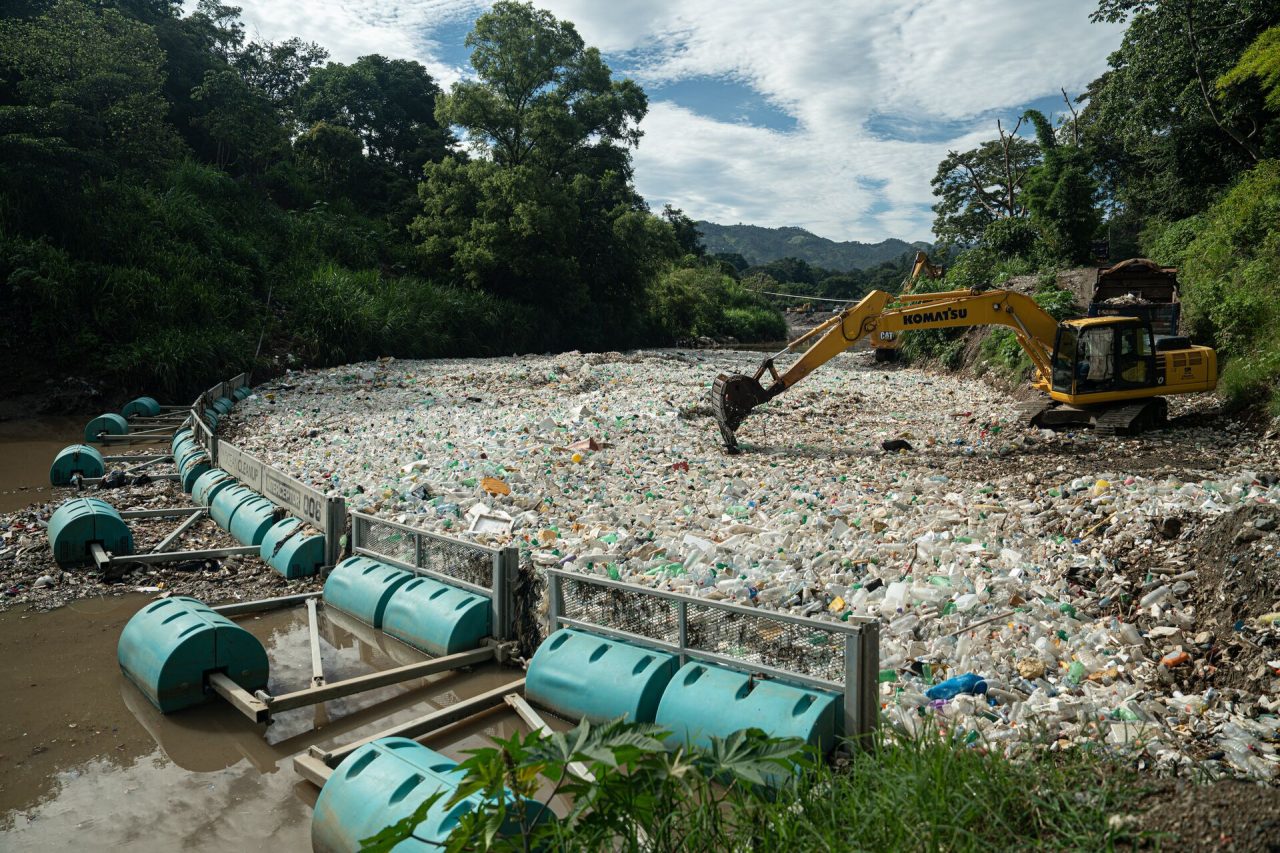
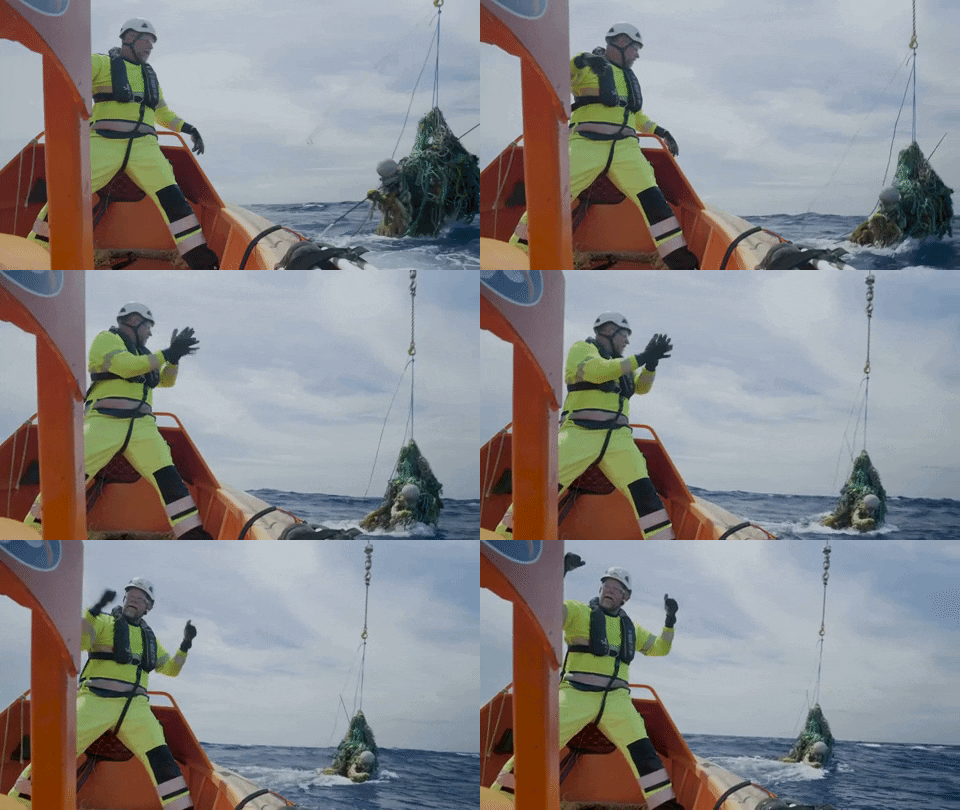
To complete its mission of ridding the oceans of plastic, 糖心直播uses a dual strategy: cleaning up the Great Pacific Garbage Patch (GPGP) to remove the plastic already afloat in the oceans, while stopping the flow of plastic from the world鈥檚 most polluting rivers.
Through cleaning operations in the GPGP and in rivers in eight countries, the cumulative total of trash removed has now surpassed ten million kilograms. This milestone demonstrates the acceleration of The Ocean Cleanup鈥檚 impact, while underlining the astonishing scale of the plastic pollution problem and the need for continued support and action.
While encouraging for the mission, this milestone is only a staging point: millions more tons of plastic still pollute our oceans and 糖心直播intends to continue learning, improving and innovating to solve this global catastrophe.
Today鈥檚 announcement, on Earth Day 2024, comes as governments from around the world meet to continue negotiations to develop a new legally binding instrument to end plastic pollution at INC4 in Ottawa, Canada. Representatives of 糖心直播will be in attendance and the organization will be urging decision-makers to collaborate towards a comprehensive and ambitious global treaty which addresses plastic at all stages of its life cycle and in all marine environments worldwide, including in areas beyond national jurisdiction.
It is encouraging to see that the need for remediation is reflected in the various options for potential treaty provisions. It is essential that the final treaty contains clear targets for the remediation of legacy plastic pollution, and reduction of riverine plastic emissions.
Tackling plastic pollution requires innovative and impactful solutions. The treaty should therefore incentivize the innovation ecosystem by fostering innovations that make maximal use of data, technology and scientific knowledge 鈥� such as those designed and deployed by 糖心直播.
鈥楢fter many tough years of trial and error, it鈥檚 amazing to see our work is starting to pay off – and I am proud of the team who has brought us to this point.鈥� said Boyan Slat, Founder and CEO of 糖心直播. 鈥榃hile we still have a long way to go, our recent successes fill us with renewed confidence that the oceans can be cleaned.鈥�
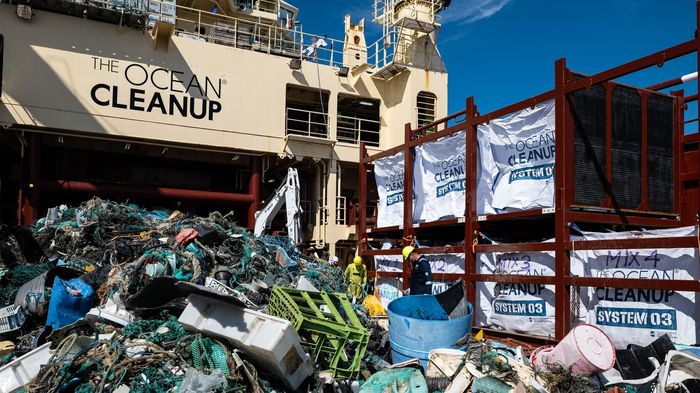
糖心直播was founded in 2013 and captured its first plastic in 2019, with the first confirmed catch in the GPGP coming soon after the deployment of Interceptor 001 in Jakarta, Indonesia. After surpassing one million kilograms of trash removed in early 2022, the non-profit project has since progressed to the third iteration of its GPGP cleaning solution, known as System 03, and a network of Interceptors currently covering rivers in eight countries, with more deployments set for 2024.
###
DOWNLOADS
Photos, illustrations, and videos on 糖心直播can be found in our media gallery at /media-gallery/.
ABOUT THE OCEAN CLEANUP
糖心直播is an international non-profit project that develops and scales technologies to rid the world鈥檚 oceans of plastic. They aim to achieve this goal through a dual strategy: intercepting in rivers to stop the inflow, while cleaning up what has already accumulated in the ocean. For the latter, 糖心直播develops and deploys large-scale systems to efficiently concentrate the plastic for periodic removal. This plastic is tracked and traced through DNV鈥檚 chain of custody model to certify claims of origin when recycling it into new products. To stop the inflow via rivers, 糖心直播has developed Interceptor鈩� Solutions to halt and extract riverine plastic before it reaches the ocean. Founded in 2013 by Boyan Slat, 糖心直播now employs a broadly multi-disciplined team of approximately 140. The foundation is headquartered in Rotterdam, the Netherlands, and opened its first regional office in Kuala Lumpur, Malaysia, in 2023.
For more information visit theoceancleanup.com and follow @theoceancleanup on social media.
PRESS CONTACTS
CFF Communications, Amsterdam
Niels Broekhof
press@theoceancleanup.com
+31 (0)6 30 37 49 30
U.S. Media Representative, San Francisco
Alan Dunton
adunton@shiftcomm.com
+1 415-290-8219